
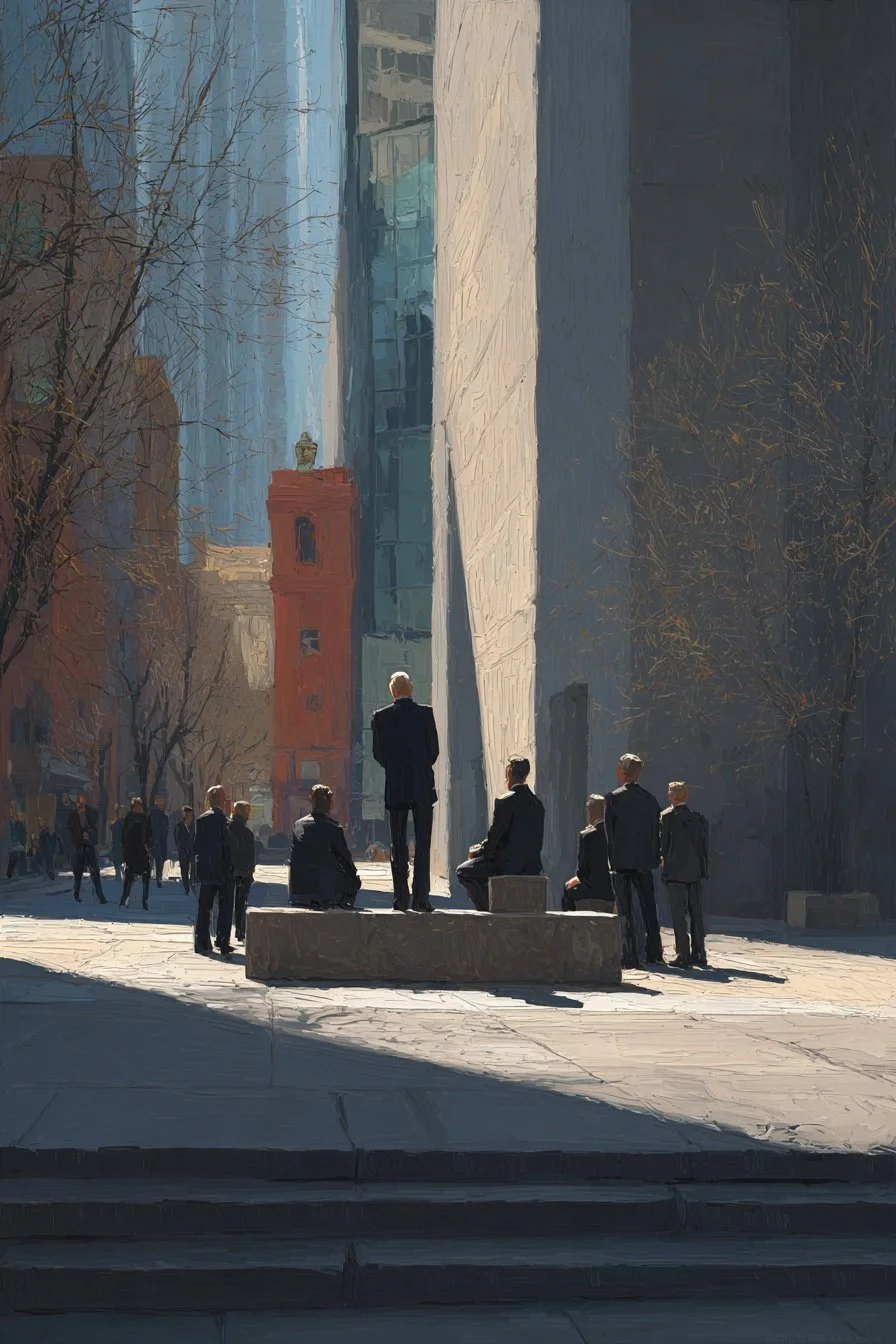
These talks explore the Christian inheritance of sonship, fatherhood, and vocation.
↓
Talks
-
A 60-minute presentation on recovering the Christian inheritance of sonship, fatherhood, and vocation: identity received from God, responsibility borne in sacrificial love, and work understood as participation in God’s creative and redemptive purposes.
The talk examines how modern life trains men to construct identity, prove worth, and treat work as self-advancement rather than vocation. It argues that the crisis facing many capable men is not lack of effort but loss of order: lives that function outwardly while becoming detached from the inheritance given in Christ. The invitation is not to greater intensity, but to recover a coherent life ordered by sonship, fatherhood, and faithful work.
-
A 60-minute presentation on how modern life quietly trains men to live buffered from the realities that should anchor Christian manhood: identity received from God, responsibility borne before others, and work understood as vocation.
The talk introduces the “Default” framework—the inherited logic of modern life that rewards performance, optimization, and control while insulating men from obedience, exposure, and surrender. It argues that the crisis facing many capable men is not collapse but drift: lives that function outwardly while becoming increasingly detached from sonship, fatherhood, and faithful work. The invitation is not to escape responsibility, but to recover the ordered life given in Christ.
-
A 60-minute presentation on the Parable of the Prodigal Son as a map of modern masculine exile: departure from the Father, famine in the soul, recognition of what has been lost, and the decision to return.
The talk examines the “far country” as the condition of men who have sought inheritance without the Father—identity without obedience, freedom without limits, and achievement without belonging. It argues that many capable men today are not in open rebellion but in the space between recognition and return: they sense that modern life cannot finally feed them, yet hesitate before the cost of going home. The invitation is to move beyond analysis of the famine and toward repentance, return, and restoration in the Father’s house.